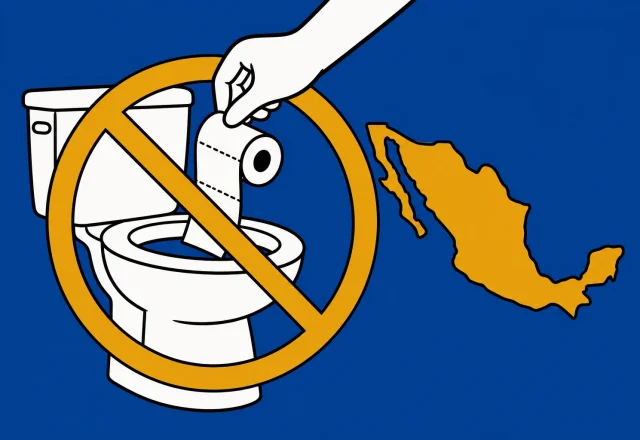
Your first “culture shock” in Mexico often isn’t food or language. It’s standing in a hotel bathroom, staring at a sign that says: “No tire papel al WC” (don’t throw paper in the toilet).
You don’t want to clog pipes, annoy your host, or create a mess. You just want to know, right now, what to do with the toilet paper.
This guide gives you clear, location-specific answers for 2026: where you can usually flush, where you shouldn’t, how Mexican plumbing works, what local authorities in Mexico City advise, and simple habits that keep you out of trouble.
Quick answer: can you flush toilet paper in Mexico?
You can sometimes flush toilet paper in Mexico, but not everywhere.
Use this basic rule:
- If there’s a sign or a bin next to the toilet, follow that rule.
- If you’re unsure, don’t flush; use the bin.
- In modern hotels and shopping malls, flushing is often fine, unless told otherwise.
The rest of the article explains why the rules change from place to place and what to expect in specific destinations.
Why flushing toilet paper is a sensitive issue in Mexico
How Mexican plumbing typically works
Most Mexican homes and many small hotels share a similar setup:
- Water comes from the city network or a local system into a ground-level cistern.
- A pump sends water to a roof tank (tinaco) or pressure tank.
- Toilets and drains work by gravity, through pipes that may be:
- Narrower than you’re used to
- Older, with rough interiors or partial blockages
- Connected to septic tanks or basic onsite systems, not a big city sewer
In urban areas, many buildings tie into a municipal sewer. In rural areas, septic tanks, cesspits, or simple drainage are still common.
The weak link often isn’t the porcelain toilet itself. It’s the downstream pipes and whatever system your waste ends up in.
Why many bathrooms say “No tire papel al WC”
There are two main reasons:
- Older or fragile drains
Older PVC or clay pipes, low slopes, and years of mineral buildup mean clogs come easily. Toilet paper adds mass that can snag and build up.
- Septic and onsite systems
Many rural and semi-rural homes, guesthouses, and some older urban buildings use septic tanks. Large amounts of toilet paper can:
- Fill tanks faster
- Create blockages between the toilet and tank
- Push systems beyond what they were designed for
Result: flooded bathrooms, expensive pumping, and annoyed owners. Hence the bin.
Where you can usually flush toilet paper in Mexico
“Usually” is key. Always check for signs first.
Modern hotels and resorts
Cancún & Playa del Carmen (Quintana Roo)
- Water and sanitary drainage are being actively upgraded in 2026:
- In Cancún’s Hotel Zone, the utility Aguakan is carrying out a sanitary drainage overhaul through September 2026, investing over 29 million pesos and installing new sanitary sewer stretches in tourist areas.
- New potable-water and drainage works are underway in city sectors and on avenues like Huayacán and Colegios, with thousands of meters of new pipe installed.
- These upgrades focus on tourist and central zones, where plumbing and sewage are being reinforced for high visitor numbers.
What that means for you:
Modern, mid-to-high-end hotels and resorts in these zones often have plumbing that can handle toilet paper, and many are designed with international guests in mind. If the hotel doesn’t want you to flush, you’ll almost always see a sign and a bin.
Mexico City (CDMX)
- The capital is investing about 7 billion pesos in 2026 in drainage, potable water, and sanitation projects, including 21 sanitation projects and treatment plant / reclaimed-water (“líneas moradas”) works.
- The system is large but stressed: leaks are common and thousands are addressed each year, but the city is clearly thinking about wastewater management, not telling everyone to avoid flushing forever.
Crucially, Mexico City’s environmental authority (Sedema) explicitly says:
- Mexican toilet paper is designed to disintegrate roughly 5 minutes after entering plumbing.
- Residents should put used toilet paper in the toilet in moderate amounts, not in the bathroom trash can.
So in much of Mexico City — especially hotels, offices, malls, and newer apartments — flushing a normal amount of toilet paper is expected and officially recommended.
Public facilities with modern plumbing
You’ll commonly be allowed to flush in:
- International airports (e.g., Mexico City, Cancún), which cater to global standards
- Newer shopping centers and big-box stores in large cities
- Modern office buildings and medical facilities
You may still see bins for sanitary products or for backup if someone ignores the rules. If toilets are Western-style and there are no “no paper” signs, flushing toilet paper is typically assumed.
Newer vacation rentals and private homes
Newer condominiums and houses built for international buyers often have:
- Modern pipe materials and design
- Direct municipal sewer connections
- Hosts who explicitly say “paper is fine” in the house rules
If the rental description or welcome guide says flushing is OK, you can follow that. If it’s silent, check the bathroom: a bin with a liner placed right next to the toilet is a strong hint that local practice is to use it.
Where you should not flush toilet paper
Rural areas and small towns
Outside major cities and resort corridors:
Rural homes often rely on
- Septic tanks
- Cesspits
- Simple soak-away or improvised drainage
- Water can be trucked in or pumped from wells, and drains are sized for liquids and minimal solids.
In these settings, toilet paper usually goes in the bin, not the bowl. Locals are doing this to protect a system that’s expensive and difficult to repair.
Older buildings in cities
In older parts of cities such as Oaxaca, Tulum town, or historic centers in many states:
- Drain pipes may be decades old or partially blocked.
- Some buildings connect to overloaded or incomplete sewage networks, especially along quickly growing coasts like Quintana Roo, where no municipality has full domestic drainage coverage yet.
If your guesthouse, hostel, or apartment is in an older building and you see a bin or a clear sign, assume no flushing.
Bathrooms with signs: always obey them
The key phrases you’ll see:
- “No tire papel al WC.” — Don’t throw paper in the toilet.
- “Papel en el bote, por favor.” — Paper in the bin, please.
- “Favor de no arrojar papel en el inodoro.” — Please don’t throw paper in the toilet.
Take these literally and seriously. Even a few guests ignoring them can cause clogs and backups for everyone.
Proper disposal methods when you can’t flush toilet paper
Using the waste bin
In no-flush bathrooms, the small bin next to the toilet is the main disposal method. To use it hygienically:
- Place all used toilet paper directly into the bin.
- Keep the lid closed if there is one.
- If the bin liner is clearly full, let staff or your host know; don’t keep piling paper above the rim.
Staff in hotels and rentals are used to this and empty bins frequently. If you’re staying long-term, your host may explain the schedule or how to tie and replace liners yourself.
Tissue disposal bags
If you’re squeamish about using open bins, or you’re moving around a lot:
- Pack small biodegradable dog-waste bags or designated toilet/tissue bags.
- Place your used paper in the bag, tie it, then drop it into the bin.
That keeps smells and visuals contained and can be more comfortable in shared bathrooms or hostels.
What if there’s no bin at all?
Sometimes you’ll encounter a bare-bones restroom — especially in rural stops or basic bus stations.
If there’s no sign and no bin:
- Use as little toilet paper as possible.
- Flush once mid-use if you’re using more than a few squares.
- If you’re worried, carry a small bag in your daypack; you can bag the paper and dispose of it later in a proper trash can.
In Mexico City or in a modern mall, with no sign or bin, flushing a normal amount of paper is usually OK, especially given Sedema’s guidance.
Environmental and health considerations
Pipes vs. trash: which is better?
There’s a trade-off:
Flushing toilet paper
- Pros: Less bathroom trash; less handling of contaminated waste.
- Cons: Can strain old pipes, septic tanks, and overloaded sewers; if the system fails, wastewater can leak into soil and waterways.
Bin disposal
- Pros: Protects fragile plumbing and septic systems; reduces emergency discharges from failing sewer lines.
- Cons: More solid waste going to landfills; possible odor or hygiene issues if bins aren’t handled well.
Mexico City’s approach gives a clue to how local authorities weigh this:
- For toilets, Sedema advises flushing reasonable amounts of toilet paper so it disintegrates in the system.
- For household trash sorting, used toilet paper is classified as non-recyclable sanitary waste along with diapers, sanitary pads, tampons, cotton swabs, and condoms. It goes in the “sanitary / non-recyclable” stream, never in recycling or organics.
So when you’re in Mexico City, flushing modest amounts of toilet paper actually matches both hygiene and waste-management policy.
Health and courtesy
Leaving used paper on the floor or ledges because you don’t like the bin is never acceptable. If you don’t want to use the shared bin, use your own small bags and take them out discreetly.
Being meticulous here isn’t just about pipes. It protects cleaners, hosts, and other guests from extra exposure to pathogens.
2025–2026 infrastructure updates that affect flushing
A few 2026 developments matter directly to your toilet habits:
Cancún Hotel Zone and northern Quintana Roo
- Aguakan is mid-way through a sanitary drainage overhaul in the Hotel Zone, started in October 2025 and running through September 2026.
- New sanitary sewers and potable-water lines are being installed in urban sectors and key avenues, improving capacity for tourism-heavy neighborhoods.
- Even with these upgrades, regional reporting shows Quintana Roo’s coastal municipalities still lack full domestic drainage networks and growth is outpacing infrastructure.
Playa del Carmen
- In early 2026, Aguakan started renewing potable-water networks in central sectors with over 43 million pesos invested, aiming to reduce leaks and reinforce service.
- Sewage coverage gaps remain, especially outside central zones.
Mexico City
- The city is pouring substantial funding into water and drainage in 2026, but addressing tens of thousands of leaks and systemic stress.
- Sedema’s public messaging focuses on proper waste separation and responsible flushing, not blanket bans on toilet paper.
For you as a traveler, the pattern is clear: major tourist cities and corridors are modernizing, especially in hotel zones. But incomplete coverage and stressed systems mean local signs and house rules still matter.
Practical traveler tips for toilet paper in Mexico
1. Read the bathroom, not a generic rule
As soon as you walk in:
- Look for signs on the wall, door, or tank lid.
- Check whether there’s a small, lined bin next to the toilet.
- Notice whether other stalls have bins and how they’re used.
If the signal is mixed, default to no flushing and ask staff later.
2. Ask one simple question
In Spanish:
- “¿Aquí se puede tirar el papel en el baño?”
(Can you throw the paper in the toilet here?)
Or:
- “¿Papel en el bote o en el baño?”
(Paper in the bin or in the toilet?)
Most staff will answer with one word: “En el bote.” (in the bin) or “En el baño.” (in the toilet).
3. Pack a small “bathroom kit”
Your kit can be tiny:
- A roll or travel pack of toilet paper or tissues
- A handful of small biodegradable bags
- A mini hand sanitizer
That’s enough to stay comfortable in basic restrooms and avoid awkward situations if there’s no paper, no bin, or both.
4. Adjust your toilet paper “dose”
In places where plumbing is marginal but flushing is allowed:
- Use fewer sheets per visit.
- Flush once halfway through if you need more.
- Never flush wipes, even if they say “flushable.” They’re a common source of blockages.
5. Respect long-term hosts and neighbors
If you’re an expat or staying for weeks:
- Follow building rules, even if you’re used to different norms at home.
- Ask your landlord or host directly about the plumbing system:
- “¿Es fosa séptica?” (Is it a septic tank?)
- “¿Prefiere que el papel vaya al bote?” (Do you prefer the paper in the bin?)
Getting this right keeps the peace and avoids expensive repairs that sometimes get passed on to tenants.
Region-by-region expectations (high-level)
Use this as a rough guide, then confirm on the ground.
| Area / Type of Stay | Flushing Toilet Paper?* | What to Expect |
|---|---|---|
| Mexico City – modern hotels, malls, airports | Often yes | Sedema encourages moderate flushing; follow signs, bins for sanitary items. |
| Mexico City – older apartments, budget stays | Mixed | Ask host; many still prefer paper in bin, especially with older drains. |
| Cancún / Playa del Carmen – resorts & large hotels | Often yes | Systems being upgraded; many built for international guests. Signs override assumptions. |
| Cancún / Playa del Carmen – budget stays, off-strip | Mixed to no | Incomplete drainage coverage; bins common, especially in older buildings. |
| Tulum (pueblo) & eco-stays | Often no | Many use septic or eco-systems; strict bin rules are common. |
| Oaxaca city & smaller colonial towns | Mixed | Historic buildings; many guesthouses still use bin-only policies. |
| Rural villages & highway stops | Usually no | Septic or basic systems; expect bins or very basic setups. |
*Always obey posted instructions even if the table suggests “yes.”
FAQs about flushing toilet paper in Mexico
Do Mexicans themselves flush or use bins?
Both. Habits vary by region, building age, and system type. Many city residents flush in their own homes, especially in places like Mexico City where authorities say it’s fine, but still use bins in older buildings, workplaces, or rural visits.
Are there official national rules?
There’s no single nationwide rule about toilet paper disposal. Guidance is local. In Mexico City, the environmental authority advises flushing moderate amounts of toilet paper and classifies it as non-recyclable sanitary waste if it’s thrown away instead.
Is it rude to ask about toilet paper?
No. Asking how they want you to handle paper shows respect. Hotel staff, hosts, and guides are used to this question from visitors.
What happens if I flush where I shouldn’t?
You may not see the result immediately, but repeated flushing of paper in fragile systems can:
- Clog pipes and cause overflows
- Force owners to pay for emergency plumbers or septic pumping
- Contribute to leaks or illegal discharges when systems fail
If you realize you’ve done it once or twice where signs say not to, stop and follow the rules going forward.
Can I use wet wipes instead?
Don’t flush wet wipes anywhere in Mexico, even if labeled “flushable.” They break down slowly and are a known cause of blockages. If you use them, bag them and put them in the trash.
Are there eco-friendlier options?
Yes. Some hotels and eco-stays offer:
- Bidet attachments or spray hoses to reduce paper use
- Recycled or quickly disintegrating toilet paper
- Clear instructions on disposal that balance plumbing protection with waste reduction
As a traveler, using less paper, avoiding wipes, and following local rules are the simplest eco-friendly steps.
Conclusion: How to get this right, every time
You don’t need a plumbing degree to avoid disasters.
- Look for signs and bins. They’re your first and best guide.
- Ask when in doubt. A 5‑second question beats a flooded bathroom.
- Pack a tiny kit. Tissue + small bags = flexibility in any restroom.
- Use less paper and never flush wipes. Everywhere.
- Align with local norms. In Mexico City hotels you’ll often flush; in rural Oaxaca or Tulum eco-lodges you probably won’t.
Follow those steps and you’ll stay on good terms with Mexico’s plumbing, your hosts, and the environment — while avoiding the kind of “bathroom story” nobody wants to tell.

Alison is a travel writer passionate about solo adventures, photography, and memorable getaway escapes. She loves uncovering Cancun’s scenic coastline, boutique stays, local experiences, and hidden gems, creating stories that help curious travelers see more than the usual tourist highlights. Her work has been featured in Forbes, CNN, Travel + Leisure, Yahoo, and other major outlets.