
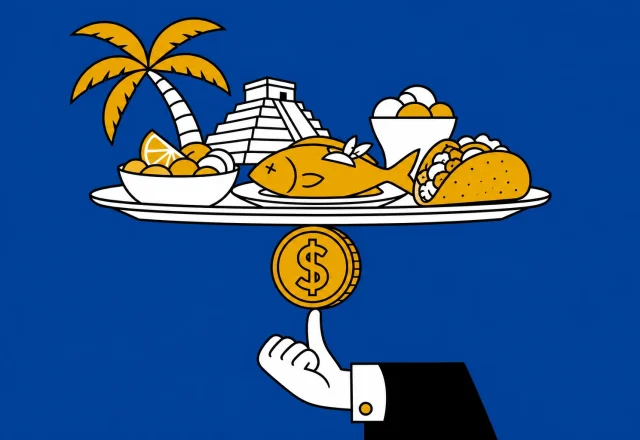
You can eat well in Cancun on 150 MXN a day. You can also blow 3,000 MXN on a single dinner.
Knowing where you fall on that spectrum is what matters.
You’ll see exactly how expensive food is in Cancun in 2026 across street stalls, downtown restaurants, Hotel Zone spots, resort dining, and supermarkets, with concrete prices, realistic daily budgets, and practical ways to save without eating junk.
Overview: Food Costs in Cancun in 2026
Cancun isn’t uniformly cheap or expensive. It’s two worlds:
- Tourist bubble (Hotel Zone, resorts) – prices often 2–4× local rates.
- Local Cancun (downtown / El Centro, neighborhood spots) – Mexican prices, not “Caribbean resort” prices.
Inflation in Mexico cooled by 2026, but food stayed pricier than a few years ago, especially fresh produce and some restaurant items. Many older guides still quote pre‑2023 prices, so 2026 travelers often underestimate what they’ll spend.
Why understanding food prices matters for travelers
Food is usually your second-biggest trip cost after accommodation. In Cancun, the spread is wide:
- A street taco: 15–30 MXN.
- A mid-range Hotel Zone dinner: 300–600 MXN per person.
- A simple downtown lunch: 80–150 MXN per person.
If you’re planning an all‑inclusive vs food‑on‑your‑own trip, or deciding where to book your stay, these numbers influence your whole budget.
Eating Out in Cancun: Price Tiers and Examples
Street food and local markets
Street vendors and market fondas are where Cancun still feels like Mexico, not a resort theme park.
Typical 2026 prices:
| Item | Typical price in Cancún (2026) |
|---|---|
| Street taco | 15–30 MXN each (20–40 MXN in touristy or “gourmet” stands) |
| Tamal | 15–25 MXN; up to 40 MXN for big or fancy fillings |
| Elote / esquite | 15–35 MXN per cob or cup |
| Simple street meal (3–4 tacos + drink) | ~80–150 MXN downtown |
What that looks like in real life:
- Breakfast on the street
- 2 tamales + coffee from a cart: ~50–70 MXN.
- Filling, fast, and usually tasty if you follow locals.
- Lunch at a local spot
- 3 tacos al pastor (20–25 MXN each) + agua fresca (20–30 MXN) = ~80–100 MXN.
- A big plate of cochinita pibil with tortillas in a market fonda: 90–130 MXN.
- Night snack
- Esquite with mayo, cheese, chili: 20–30 MXN.
- One more taco: another 20–30 MXN.
Portion and quality notes:
- Tacos at 15–20 MXN tend to be smaller but still filling when you eat three or four.
- Stands packed with workers and locals at odd hours usually mean good and safe food.
- Tourist‑facing “street” stands in the Hotel Zone often charge 30–40 MXN per taco with slick branding and smaller servings.
Where to find good value:
- Downtown / El Centro – side streets off Avenida Tulum and around Parque Las Palapas.
- Local markets – Mercado 23, Mercado 28 (touristy but still reasonable if you avoid the most aggressive spots).
Mid-range restaurants and Hotel Zone dining
Once you sit at a proper restaurant with table service, prices climb, especially if there’s an ocean view.
Average 2026 restaurant prices:
| Area | Typical cost per person (full meal) |
|---|---|
| Downtown, casual / mid-range | ~80–200 MXN |
| Hotel Zone, mid-range | ~300–600 MXN |
| Simple meal for two, downtown | ~300–450 MXN with drinks |
| Mid-range dinner for two, local neighborhoods | Around 1,000 MXN with drinks and service |
Downtown / local neighborhoods (best value sit‑down options)
What you’ll usually pay:
- Comida corrida (set lunch): 80–120 MXN
Includes soup, main dish, tortillas, and agua fresca. Portions are solid; many people are full until dinner.
- Casual dinner at a taquería or small restaurant
- Shared guacamole: 60–100 MXN
- Main (enchiladas, fajitas, grilled fish, etc.): 90–180 MXN
- Soft drink or agua fresca: 25–40 MXN
- Per person: ~150–250 MXN depending on extras.
Quality tends to be high for the price, especially in places that look plain but stay busy.
Hotel Zone mid-range restaurants
The same style of meal can jump to 2–4×:
Lunch or dinner in the Hotel Zone, casual to mid‑range
- Starters: 120–250 MXN
- Mains: 250–450 MXN
- Cocktails: 150–300 MXN
- Rough total: 300–600 MXN per person, easily higher with alcohol.
You’re paying for:
- Location (lagoon or sea view).
- English‑speaking staff and tourist‑oriented menus.
- Higher rents and resort overhead.
For many travelers, a strategy that works: eat breakfast and most dinners downtown, save one or two Hotel Zone meals for the view.
Luxury resort restaurants
Resort restaurants are where “How expensive is food in Cancun?” turns into “How expensive do you want it to be?”
The brief’s specific dish prices are from ultra‑luxury resorts worldwide (like the Waldorf Astoria Maldives), where a single dish can hit $100–$180 USD, so keep that in mind as a ceiling rather than a Cancun norm.
In Cancun’s higher‑end resorts, expect:
- Upscale à la carte main: often 500–1,200 MXN per dish, depending on protein and concept.
- Tasting menus or premium themed dinners: can reach or exceed 2,000 MXN per person once you count tax and service.
- Cocktails at resort bars: often 200–350 MXN each.
Compared to downtown:
| Type of restaurant | Typical main course price | Comment |
|---|---|---|
| Downtown casual / local | 90–180 MXN | Hearty plates, no view |
| Hotel Zone mid‑range | 250–450 MXN | Views, branded concepts |
| Resort fine dining | 500–1,200+ MXN | Presentation, branding, service-heavy |
If your resort isn’t all‑inclusive and you eat 3 meals a day on‑site, food can exceed your room cost over a week. Many travelers quietly Uber to downtown for half their meals to balance the budget.
Buying Groceries in Cancun: How Much Does It Cost?
Self‑catering or partial self‑catering can keep your food spending predictable, especially for families or long stays.
Typical supermarket prices for staples (2026)
Big chains like Walmart, Soriana, and Chedraui are your reference points.
| Item | Typical Cancun supermarket price (2026) |
|---|---|
| Milk, 1 L | 15–25 MXN |
| Eggs, 10–12 | 21–60 MXN |
| White bread, 400–500 g | 20–50 MXN |
| Rice, 1 kg | 13–45 MXN |
| Chicken breast, 1 kg | 91–200 MXN |
| Beef, 1 kg | 145–280 MXN |
| Local cheese, 1 kg | 107–220 MXN |
| Bottled water, 1.5 L | 12–25 MXN |
| Apples, 1 kg | 38–80 MXN |
| Bananas, 1 kg | 11–40 MXN |
| Oranges, 1 kg | 11–40 MXN |
| Tomatoes, 1 kg | 14–52 MXN |
| Potatoes, 1 kg | 20–35 MXN |
Rough idea for a simple breakfast shop (2–3 days, 1–2 people):
- Bread, eggs, some cheese, fruit, yogurt, and bottled water: often 200–350 MXN total.
- A 2026 guide pegs “breakfast supplies for multiple days” around 10–15 USD, which matches the ranges above.
For snacks:
- Soda and packaged snacks vary more and run higher in convenience stores than supermarkets. One Cancun source quotes a Coca‑Cola in small shops around 63–64 MXN, while supermarkets undercut that.
Local markets vs. supermarkets: where to shop?
Broad pattern:
- Local markets – often cheaper for produce, sometimes meat.
- Supermarkets – more consistent for packaged goods, dairy, water, and big one‑stop shops.
From the available data:
- Cheaper produce examples in markets
- Bananas, oranges, tomatoes often at the bottom of the national ranges, like ~11–18 MXN/kg when you hit a good stall or lower‑priced listing.
- Apples sometimes closer to 25–40 MXN/kg in budget‑friendly places, vs 60–80 MXN in more polished supermarkets.
How to combine both:
- Buy heavy basics and packaged food at Walmart/Soriana/Chedraui.
- Top up fresh fruit, veggies, and perhaps tortillas in local markets for better value and flavor.
If you compare:
| Approach | Pros | Cons |
|---|---|---|
| Eating out every meal | No cooking, variety | Adds up fast in Hotel Zone/resorts |
| Groceries + simple cooking | Best for budgets, families, long stays | Time, need kitchen or at least fridge |
| Hybrid (groceries + local meals) | Balanced cost and experience | Requires small planning effort |
Budgeting Your Daily Food Expenses in Cancun
Let’s turn all those numbers into realistic daily meal plans. These are approximations that match 2026 prices and assume moderate appetites.
Budget traveler meal plan and costs
Audience: hostel guests, backpackers, digital nomads trying to keep daily food under control without skipping meals.
Sample day (budget-focused):
- Breakfast
- Host breakfast or groceries: bread, eggs, fruit, coffee at home.
- Estimated: 40–60 MXN (if averaged over several days of grocery shopping).
- Lunch
- Comida corrida downtown (soup + main + drink): 80–120 MXN.
- Dinner
- 3–4 tacos from a local stand at 20–25 MXN each + soft drink: 100–150 MXN.
- Snacks / extra water
- Fruit, street elote, or small snack: 20–40 MXN.
Total budget range:
~240–370 MXN per day if you avoid the Hotel Zone and resort restaurants.
If you lean heavier on groceries and cook more, you can push down towards 200–250 MXN on many days.
Mid-range traveler meal plan and costs
Audience: people who like a mix of restaurants and convenience, fine paying for a few views and cocktails.
Sample day (balanced):
- Breakfast
- Café or bakery: coffee + pastry or light plate.
- 80–150 MXN.
- Lunch
- Casual downtown restaurant or beach club with one drink.
- 150–250 MXN per person.
- Dinner
- Hotel Zone or nicer downtown spot.
- Main + shared starter or dessert + one drink.
- 350–600 MXN per person depending on location and alcohol.
- Snacks / coffee / water
- 40–80 MXN.
Total mid‑range daily food budget:
~620–1,080 MXN per person, with the lower end if you eat more downtown; higher if you favor Hotel Zone dinners and cocktails.
Luxury traveler meal plan and costs
Audience: staying in upscale or luxury resorts, open to premium dining, cocktails, and maybe one or two “special” dinners.
Sample day (luxury / resort‑heavy):
- Breakfast
- Resort buffet or à la carte if not included: 250–450 MXN.
- Lunch
Resort restaurant, pool menu, or trendy Hotel Zone spot
- 300–600 MXN per person.
- Dinner
Upscale resort or high‑end Hotel Zone restaurant
- 2–3 courses + cocktails.
- 800–1,800 MXN per person depending on concept and alcohol.
- Snacks / coffee / bar drinks
- 150–300 MXN.
Total luxury daily food budget:
~1,500–3,000 MXN per person, with spikes for tasting menus, wine pairings, or room‑service splurges.
If you’re paying those kinds of numbers and you like variety, a non‑all‑inclusive stay with freedom to explore downtown often makes more sense than eating every meal at the same resort restaurant.
Tips to Save Money on Food in Cancun
You don’t have to chase the absolute cheapest food. Target good value for what you get.
- Shift your eating area, not your standards
- Same dishes are far cheaper downtown than in the Hotel Zone.
- A 150 MXN taco meal downtown can be 400–500 MXN on the strip, with smaller portions.
- Use street food for at least one meal a day
- Breakfast tamales and tacos or a street‑stand dinner will keep you full for 50–150 MXN.
- Look for lines of locals and visible hand‑washing and hot griddles.
- Make breakfast the “cheap” meal
- Stock your room with fruit, yogurt, and bread.
- An apartment or hotel with even a mini‑fridge pays off quickly.
- Eat main meals at lunch
- Comida corrida and lunch specials are cheaper than dinner for similar food.
- Make lunch your heavier sit‑down restaurant meal; go lighter at dinner.
- Avoid convenience store markups where possible
- Oxxo and small corner stores are handy but pricey for drinks and snacks.
- Buy bulk water and snacks at Walmart/Soriana/Chedraui, then top up in small shops only when needed.
- Limit cocktails in Hotel Zone / resorts
- Drinks there often run 200–350 MXN each.
- Have one sunset drink for the experience, not four.
- Check service charges before double‑tipping
- Some Hotel Zone and resort places add 10–15% service to the bill.
- If you see it itemized, tipping extra is optional or can be smaller.
Currency, Tipping, and Payment Methods for Food
How you pay has a direct impact on how expensive food feels.
Currency: pesos vs. dollars
- Always carry Mexican pesos.
- Many tourist restaurants and resorts accept USD, but the exchange rate is usually worse than any ATM.
- Street food and local eateries often prefer pesos; some won’t even quote prices in USD.
To keep food costs under control:
- Pay in MXN, especially for street food, markets, and downtown restaurants.
- Use ATMs from big banks (inside malls or supermarkets) rather than currency‑exchange kiosks.
Tipping for food in Cancun (2026 norms)
General expectations:
Street food and small local spots
- Rounding up or leaving 5–10 MXN for a taco stand meal is appreciated but not rigid.
- If you sit at a basic fonda with table service, 10% is kind.
Casual / mid‑range restaurants
- 10–15% of the pre‑tax bill is standard.
- Many locals hover around 10%; tourists often give 15% for good service.
Hotel Zone and resort restaurants
- You’ll often see suggested tips of 15–20%.
- Check if a service charge is already included. If yes, add only a small extra if service was exceptional.
Payment methods
- Street food and markets: mostly cash only.
- Downtown restaurants: many take cards, but cash is safer as backup.
- Hotel Zone / resorts: cards widely accepted; some push you towards USD options—choose MXN on the terminal to avoid dynamic currency conversion fees.
Frequently Asked Questions About Food Costs in Cancun
How much does a typical street food meal cost in Cancun in 2026?
A filling street meal of 3–4 tacos plus a drink usually costs around 80–150 MXN in downtown Cancun.
In the Hotel Zone or touristy stands, expect closer to 120–200 MXN for similar volume.
What’s the average cost of dining in popular Hotel Zone restaurants?
For a mid‑range sit‑down meal in the Hotel Zone in 2026:
- Per person: about 300–600 MXN for a main, perhaps a starter or dessert to share, and one drink.
- Upscale or trendy places can run higher, especially with cocktails or wine.
How expensive is it to buy groceries for self‑catering?
Groceries in Cancun supermarkets are moderate by North American standards:
- Basic breakfast and snack supplies for a couple of days: often 200–350 MXN.
- A full cart with fruit, bread, eggs, some meat, rice, and water for several days can fall in the 600–1,200 MXN range depending on brands and quantity.
For a week of partial self‑catering, most people spend less than eating out for three meals a day, even in downtown.
Is it cheaper to eat out or buy groceries in Cancun?
- Cheaper street food + some groceries is usually the best compromise.
- Eating only at local street stalls and budget restaurants can rival supermarket cooking on cost, once you factor in time and the need for a kitchen.
- Eating in the Hotel Zone and resorts every meal is the most expensive route by far.
Are resort restaurants much pricier than local options?
Yes. For comparable mains:
- Downtown casual: 90–180 MXN.
- Hotel Zone mid‑range: 250–450 MXN.
- Resort fine dining: 500–1,200+ MXN.
Factor in drinks and service, and a resort dinner for two can easily be 2–4× a downtown meal.
Do food prices vary by season in Cancun?
Tourist seasons affect menus and promotions more than the sticker price of tacos:
- High season (roughly December–April, plus holiday weeks): reservations are harder, some places quietly raise prices or limit specials.
- Low season: you might see more promos or value menus, especially in Hotel Zone venues trying to fill tables.
Fresh produce prices can swing with Mexico’s national food inflation trends, but street food and set lunch prices typically move in smaller steps.
How much should I budget per day for food in Cancun?
Using 2026 prices:
Tight budget traveler
- Street food + groceries, little alcohol.
- ~240–370 MXN/day.
Mid‑range traveler
- Mix of cafés, downtown restaurants, and a few Hotel Zone meals.
- ~620–1,080 MXN/day.
Luxury traveler
- Resort dining, cocktails, and premium experiences.
- ~1,500–3,000 MXN/day.
Adjust upward if you plan to drink heavily in bars or stick to resort restaurants.
Conclusion: So, How Expensive Is Food in Cancun?
Food in Cancun can be cheap, but the Hotel Zone and resort bubble make it easy to overspend without realizing it. A taco downtown for 20 MXN tells a very different story from a 500 MXN main under the same sun.
If you want good value:
- Eat in downtown and local neighborhoods often.
- Use street food and set lunches as anchors in your day.
- Rely on supermarkets for breakfast and snacks, especially on longer stays.
Before you finalize your trip:
- Map your hotel against downtown and supermarket locations.
- Decide which meals you’re comfortable “spending up” on, then plug your style into the budget ranges above.

Alison is a travel writer passionate about solo adventures, photography, and memorable getaway escapes. She loves uncovering Cancun’s scenic coastline, boutique stays, local experiences, and hidden gems, creating stories that help curious travelers see more than the usual tourist highlights. Her work has been featured in Forbes, CNN, Travel + Leisure, Yahoo, and other major outlets.